At the cutting-edge of museum practices

MOMENT NYC (Museum of Music & Entertainment in New York/ http://www.momentnyc.org) stands out as a project that aims to endow New York City with a museum to safeguard, celebrate and cherish its popular music. Founded in 2014 by Genji Siraisi – a native New Yorker, professional musician, composer, and music producer -, the institution has been awarded a provisional museum charter from the New York State Board of Regents and 501c3 non-profit status and is currently concentrating its efforts on advancing the museum’s structure and establishing a physical site. At the same time, its team of scholars has been applying to research councils and other funding bodies (NEH, National Endowment for the Humanities, and New York Council for the Humanities) to support ethnographic research on New York’s popular music and thereby build up its exhibitive narrative. The museum is also highly committed towards community building not only to create awareness of its initiative but also and especially to reach out and begin building an archive of collective experiences and memorabilia able to ensure detail and context to the larger exhibitive narrative. Its educational program is already on the move and represents a distinctive feature of the museum’s already ongoing activities. Performative sessions conducted by highly seasoned professional are held at public schools and designed to enable students to delve deeper into their thinking about music in general, music in their lives, and the very meaning of music both to humans and to New York City. By visiting its site http://www.momentnyc.org/blog/donate/, anyone can get involved with supporting, sponsoring and/or funding MOMENT NYC.
(more…)

The museum and popular music: spectacle or dialogue?

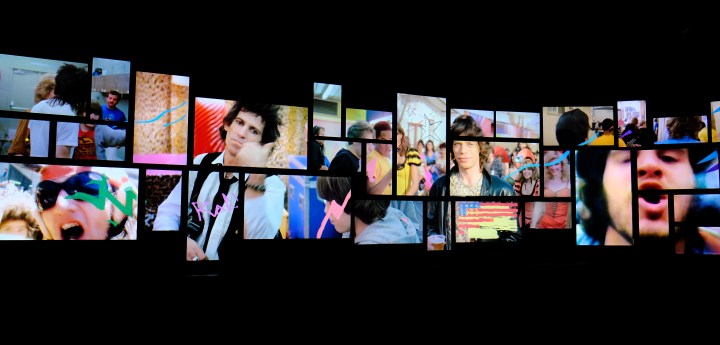
Exhibitionism is a travelling exhibition that pays tribute to a long-lasting band followed by many devoted fans: The Rolling Stones. It is going to be on display worldwide for four years and was first displayed at the Saatchi Gallery in London from 29th April to 4th September 2016.

The exhibition left me with the belief that it is no longer possible to maintain that museums have long been avoiding dealing with popular music themes, nor even that heritagising them is an innovative and untested museum practice. On the contrary, I would say that organising an exhibition about popular music by calling upon, at some point, the exhibition of sound and/or music has clearly proved a successful practice with great impact. Even more, I would say it has become an approach every museum seeks to profit from, if it has assertive marketing and if it in some way pays attention to, if not innovative, at least the latest opportunities. Accordingly, plenty of museums have been jumping on this bandwagon with the aim of making an extraordinary critically acclaimed show, without carefully exploring the opportunities that museums’ curators can be provided with, in order to deliver truly dialogic narratives about the theme.

(more…)

What does it mean to be immersive?

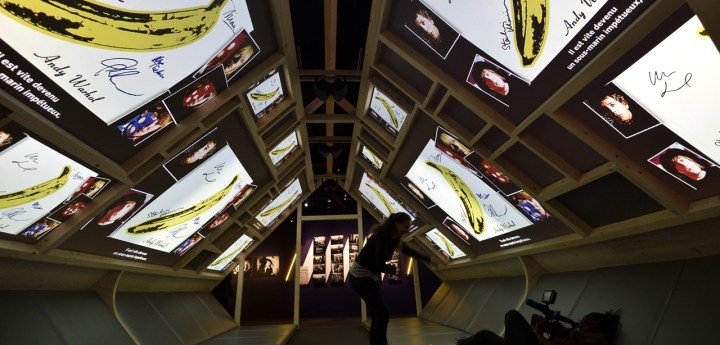
Although I have consistently maintained that there is no established and tested practice of exhibiting popular music in museums, I believe the time has come to renew this discourse, at least with regard to Western museum practice, where, indeed, popular music exhibitions have become increasingly common. While in the beginning these were displayed at some marginal or smaller culture institutions, nowadays they are flourishing in acknowledged and institutional museums, particularly in the form of tribute narratives. An example of this practice is the exhibition I saw in Paris, The Velvet Underground, New York Extravaganza, on display at the Philharmonie until 26th August 2016.

(more…)

Everything that museum professionals have long been waiting for a museum exhibition to achieve but which has not yet been invented.

The only possible way to start my essay about the installation-work The Visitors by Ragnar Kjartansoon, on display in The Broad Museum in Los Angeles, is by highlighting the memorable way I experienced it, as well as the exhilaration, passion and pleasure that I felt. I became even more delighted when I realised that, in addition to the rewarding experience I had had, the installation-work also accomplishes two things that are, it seems to me, of particular significance today. On the one hand, it achieves one of the most demanding goals of contemporary museum studies in that it provides the museum-goers with avenues not to learn or contemplate but to experience some dimensions of life. On the other hand, although it was certainly not an intentional gesture by the curator, The Visitors is particularly interesting in that the experience it provides visitors with is theoretically informed by ethnomusicology, most notably by placing the museum-goers within a rich picture-experience of the relevance of music to human life. Additionally, the fact that music’s role in and significance to society is not being carried conventionally by words by the installation-work, but is being conveyed by the experience itself that it endows museum-goers with, stands like a cherry on the top of the cake: ultimately, in the installation-work The Visitors, it is the experience that is the text.

(more…)