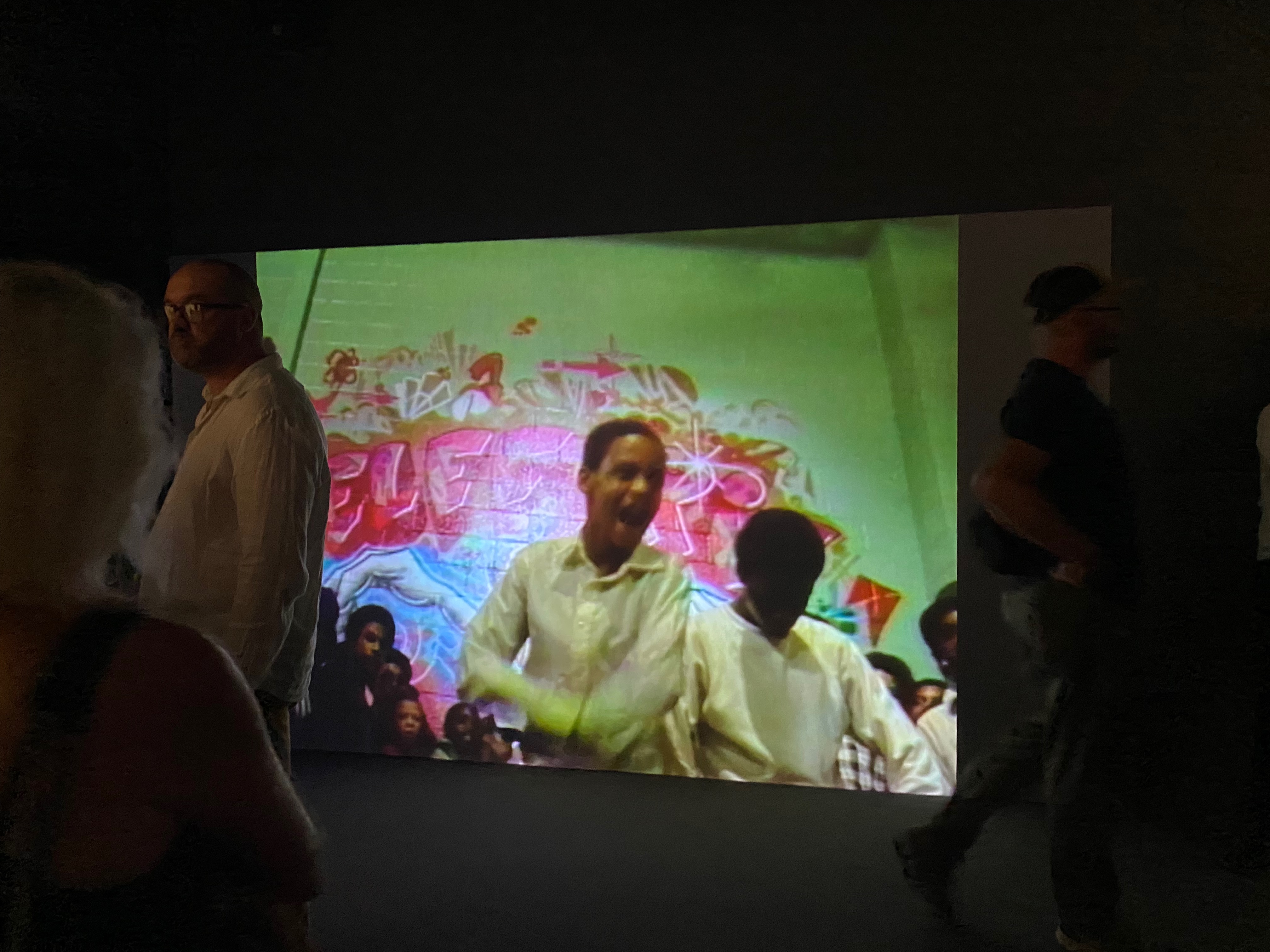
Basquiat Soundtracks sheds light on the intense relationship between Basquiat’s artistic practice and music, surpassing largely the mere fact that he painted with music in the background. Reflecting Basquiat’s deep interest in the legacy of the African diaspora and his acute awareness of the politics of race in the United States, the exhibition presents a captivating display of nearly one hundred works, rare archives, emblematic musical instruments, previously unpublished audio-visual document, and a carefully curated collection 104 musical songs that were closely related to Basquiat. Visitors can also download the songs as a playlist using a QR code.

In relation to music, visitors are told about Basquiat’s involvement in the Manhattan music scene, his unofficial role as the leader of the band Gray, named after Gray’s Anatomy (1858) the medical book that had a profound influence on Basquiat, as well as his profound relationship with new urban sound like no wave and hip hop, rap, jazz and experience as a record producer. A music lover, Basquiat moreover collected over 3.000 records, ranging in genre from classical to blues and jazz, zyeco, soul, reggae, hip-hop, opera and rock.

The exhibition stands out for its innovative approach in highlighting how Basquiat transformed the audible into the visible. In reveals how his paintings abound are rich with elements that render noise visible, namely by using onomatopoeia and crisscrossing vehicles, cartoon quotes and anatomical drawings that present the body and organs as emitters of sounds.

In terms of museum practice, there is a noticeable endeavour to place equal emphasis on hearing as well as seeing, aligning with the latest trends in sensory museology. Together with exhibiting Basquiat’s works as part of a bold scenography, the exhibition features a cutting-edge audio component that attests to Basquiat’s broad and diverse musical culture. The exhibition’s soundtrack consists of almost a hundred pieces of music, artfully curated by using Bronze, a pioneering technology. Through meaningful and unpredictable associations, this technology composes a playlist that aligns with the exhibition’s themes and stages. The outcome is a generative and ever-evolving soundtrack, providing visitors with a unique and multifaceted listening experience inspired by Basquiat’s own musical influences.

As I conclude writing this post, I closed all the photos and reviews, turning inward to reflect on my personal experience with the exhibition. I aimed to grasp the lingering feelings and ideas about Basquiat that stayed with me. What emerges vividly is Basquiat’s universal dimension and its sensibility, which can be described as simultaneously polemic and poetic, conflicting yet tender. Although it might seem like a straightforward endeavour, achieving this level of complexity in an exhibition is undoubtedly a challenging standard to meet.

Unmissable!

Until 30th July 2023.

The exhibition Paris-Londres, Music Migrations (1962-1989) is currently on display at the Musée National de L’Histoire de L’Immigration in Paris. In terms of contents, it draws a parallel between how Paris and London were reshaped into multicultural capitals in the late 20th century as a result of post-colonial immigration. In order to reveal a great deal about the issues brought about by the migration, dislocation and acculturation of generations of post-colonial immigrants to these countries, curators have used the lens of popular music specifically by illustrating how migrants have used music to express their joys, hopes and aspirations, and to fight against racism. Overall, the exhibition illustrates how genres of popular music have intersected and developed to build up the multicultural musical expression we know today, thereby depicting popular music as a contextually situated platform for cultural exchange. (more…)

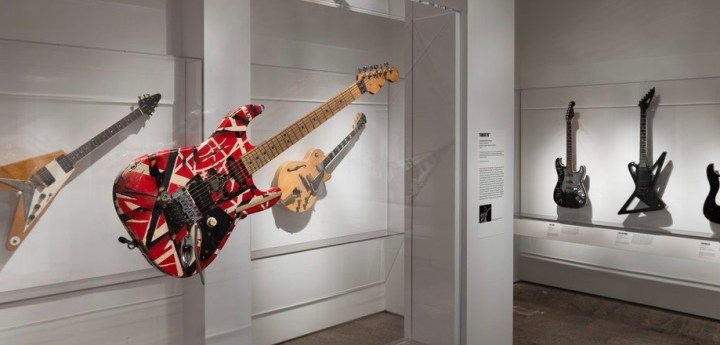
Play it Loud is an exhibition dedicated to the musical instruments which have been the hallmark of Rock & Roll and to the iconic musicians that have used them throughout the history of Rock and Roll music. It is being staged at The Metropolitan Museum of Art (colloquially The Met), a museum known for collecting and presenting works of art ranging from classical antiquity and Ancient Egypt to great Masters from all around the world. At first glance, a museum like The Met showing artifacts related to musical practices deemed rebellious might appear surprising and controversial. Such an exhibition, nonetheless, is in continuity with The Met’s approach, in that the museum has long been developing encyclopaedic collections of musical instruments, costumes and accessories from musical practices around the world. At the same time, the fact that The Met is holding this exhibition is not surprising in that, given every year there appears an exhibition around such a topic almost everywhere, it has become remarkable in recent times for a museum to stage an exhibition about popular music.

(more…)

If one had to be brief, one might say that Electro: from Kraftwerk to Daft Punkis an exhibition tracing 30 years of electronic music and experimentalism at the Philharmonie de Paris until the 11th of August 2019. A standard review would then follow, highlighting the uniqueness and singularity of some of the objects on display and drawing readers’ attention to the artists involved in the project and to the work of the sound designer and of the scenographer. None of this would be wrong, for sure. However, this exhibition, Electro, is, at least in museological terms, much more than this: in short, it is an event that has much to offer on how to effectively build experiential exhibitions, based on the landmark assumption of museum studies that an exhibition should facilitate dialogic rather than linear communication. In fact, several aspects are particularly worth mentioning as they closely align with a contemporary museum framework, as I would like to demonstrate:

(more…)

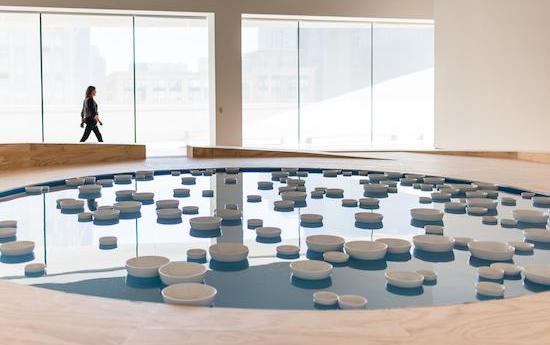
The Soundtracks exhibition was held at the SFMoMA from July 2017 to January 1st, 2018. I do not usually choose to comment on an exhibition after it has closed, but this time I only had the opportunity to visit it at the very end. I was actually staying in San Francisco for the last 15 days of the exhibition to conduct interviews about how museum-goers received the work The Visitors, which was part of the Soundtracks’exhibition but, of course, I took the opportunity to have a look at the other exhibits for myself.

(more…)

Michael Jackson: On the Wallis currently on display at the National Portrait Gallery in London until October 21st. In the words of Nicholas Cullinan, the National Portrait Gallery director and the curator, the exhibition seeks to convey the artists’ ‘[…] fascination, solidarity or sympathy for what Jackson represented, what he did and what was done to him. The exhibition examines Michael Jackson as both an artist recognised as such by other artists, and as a total work of art’ [1].

(more…)