Basquiat Soundtracks sheds light on the intense relationship between Basquiat’s artistic practice and music, surpassing largely the mere fact that he painted with music in the background. Reflecting Basquiat’s deep interest in the legacy of the African diaspora and his acute awareness of the politics of race in the United States, the exhibition presents a captivating display of nearly one hundred works, rare archives, emblematic musical instruments, previously unpublished audio-visual document, and a carefully curated collection 104 musical songs that were closely related to Basquiat. Visitors can also download the songs as a playlist using a QR code.

In relation to music, visitors are told about Basquiat’s involvement in the Manhattan music scene, his unofficial role as the leader of the band Gray, named after Gray’s Anatomy (1858) the medical book that had a profound influence on Basquiat, as well as his profound relationship with new urban sound like no wave and hip hop, rap, jazz and experience as a record producer. A music lover, Basquiat moreover collected over 3.000 records, ranging in genre from classical to blues and jazz, zyeco, soul, reggae, hip-hop, opera and rock.

The exhibition stands out for its innovative approach in highlighting how Basquiat transformed the audible into the visible. In reveals how his paintings abound are rich with elements that render noise visible, namely by using onomatopoeia and crisscrossing vehicles, cartoon quotes and anatomical drawings that present the body and organs as emitters of sounds.

In terms of museum practice, there is a noticeable endeavour to place equal emphasis on hearing as well as seeing, aligning with the latest trends in sensory museology. Together with exhibiting Basquiat’s works as part of a bold scenography, the exhibition features a cutting-edge audio component that attests to Basquiat’s broad and diverse musical culture. The exhibition’s soundtrack consists of almost a hundred pieces of music, artfully curated by using Bronze, a pioneering technology. Through meaningful and unpredictable associations, this technology composes a playlist that aligns with the exhibition’s themes and stages. The outcome is a generative and ever-evolving soundtrack, providing visitors with a unique and multifaceted listening experience inspired by Basquiat’s own musical influences.

As I conclude writing this post, I closed all the photos and reviews, turning inward to reflect on my personal experience with the exhibition. I aimed to grasp the lingering feelings and ideas about Basquiat that stayed with me. What emerges vividly is Basquiat’s universal dimension and its sensibility, which can be described as simultaneously polemic and poetic, conflicting yet tender. Although it might seem like a straightforward endeavour, achieving this level of complexity in an exhibition is undoubtedly a challenging standard to meet.

Unmissable!

Until 30th July 2023.

Animals, Art, Science and Sound is an exhibition focussing how animals have been represented and described through words, visuals, and recorded sounds. The exhibition features more than 100 artworks, manuscripts, sound recordings and books, many on display for the first time. Items on exhibition span 2.000 years and are divided into four sections, namely darkness, water, land and air.

The exhibition follows the same visual style as other exhibitions I have seen at the British Library. Although the visual presentation is not particularly impressive or engaging, the documents and manuscripts on display are truly remarkable and often breathtaking. It’s impossible not to be captivated by the age and authenticity of these items, as well as the wonder of their images, paper quality, and exquisite finishes. I was somewhat disappointed with the exhibition due to the small number of animal sound recordings featured. Considering that the British Library Sound archive is one of the largest collections of recorded sound in the world, with over six million items, I was expecting a more extensive display of animal sounds. There are, nonetheless, noteworthy sound-related aspects and exhibits worth highlighting.

One thing is how the exhibition stresses how the invention of recorded sound allowed naturalists to document the sonic dimensions of animal life, to discover new species and unravel the meanings behind their songs and calls, stimulate creativity and give pleasure to listeners, and how these recordings served a wide range of purposes from scientific research to artistic endeavour. There are, nonetheless, noteworthy sound-related aspects and exhibits worth highlighting:

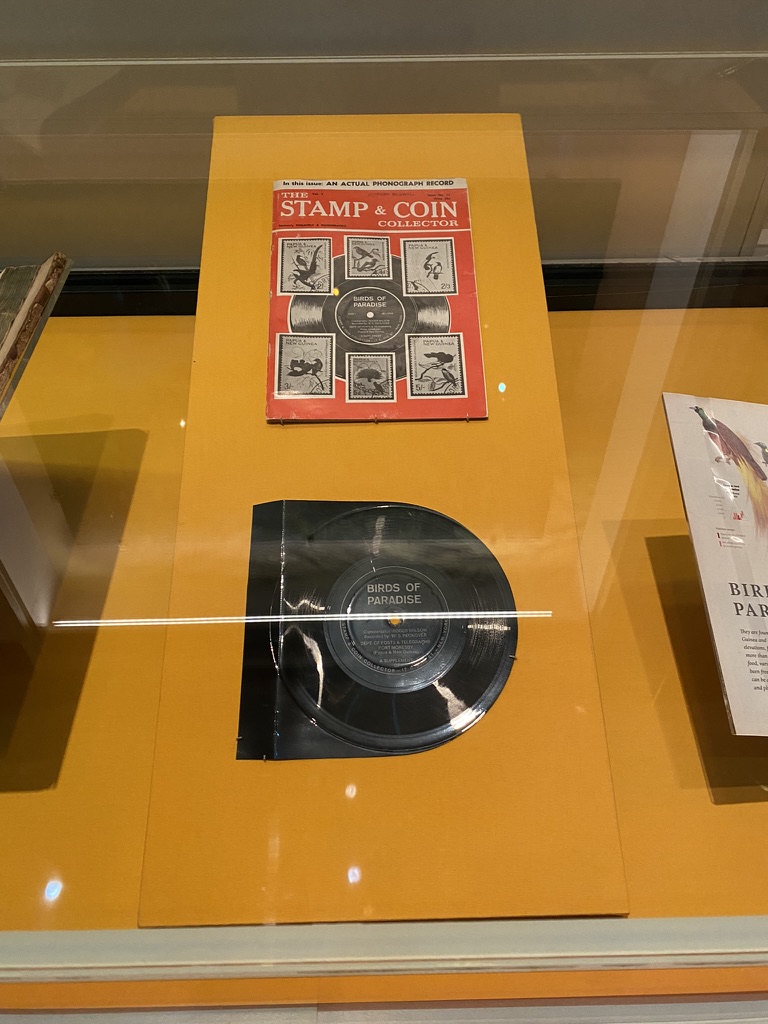
● A 1965 issue of the Stamp and Coin Collector magazine containing the first commercially released sound recordings of birds of paradise who are known to produce a variety of vocalisations;

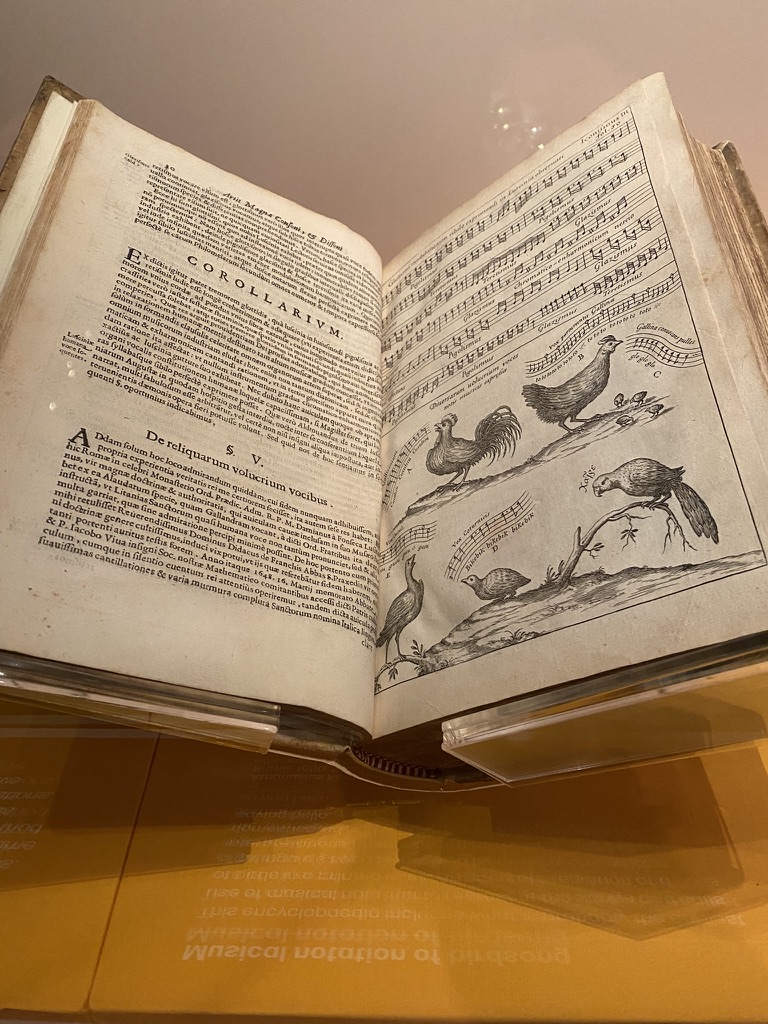
● An encyclopaedia including what is probably the earliest use of musical notation to represent the songs and calls of birds in a printed work;

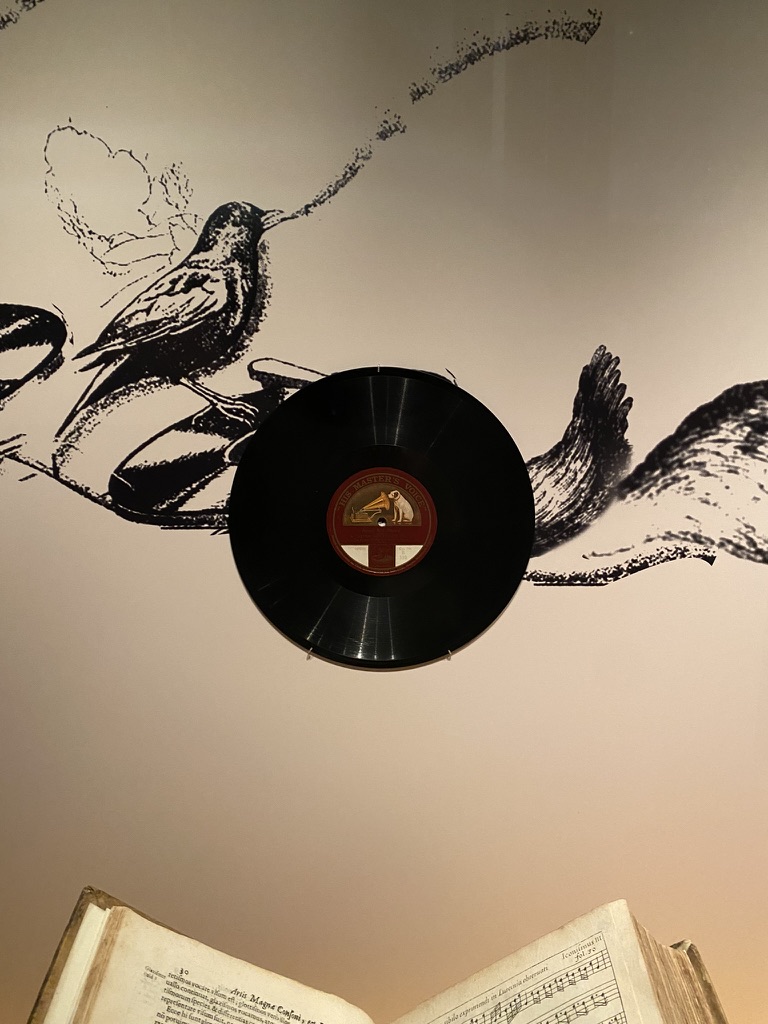
● The first gramophone commercially released recording on an animal which proved to be an instant hit with listeners—engineers from the Gramophone company in Germany wanted to see whether it was possible to record birdsong, their experiments were successful and resulted in the release of eight records of nightingale song in 1910;

● The first audio identification guide for British birds released in 1938 containing recordings made by the pioneering wild life sound recordist Ludwig Kock—people could learn by recognise the songs and calls of common British birds from the comfort of their homes;

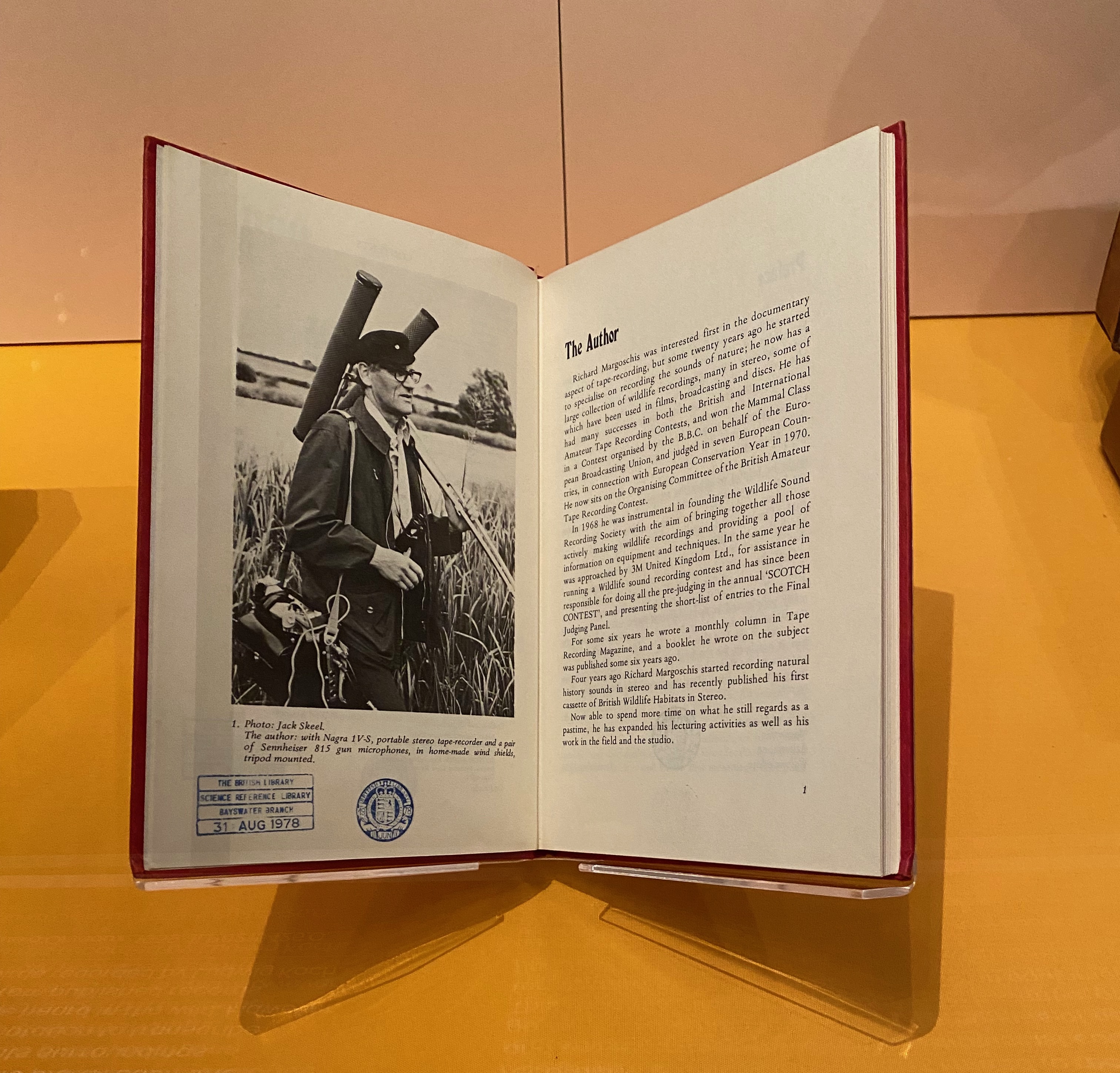
● A field recordist’s handbook to help the amateurs enthusiasts which has become an essential guide for any new recordist, offering advice on equipment, field craft and cataloguing;

● A tape containing the song of the last Kaua’i oo. Habitat destruction and predation from invasive species, introduced to the Hawailan island of Kaua’i over the last hundred years, reduced the once thriving population to a single pair. In 1982, the female died during a hurricane, leaving behind her male partner. It is his solitary sonf that can be heard in the tape. The species was declared extinct in 2000;

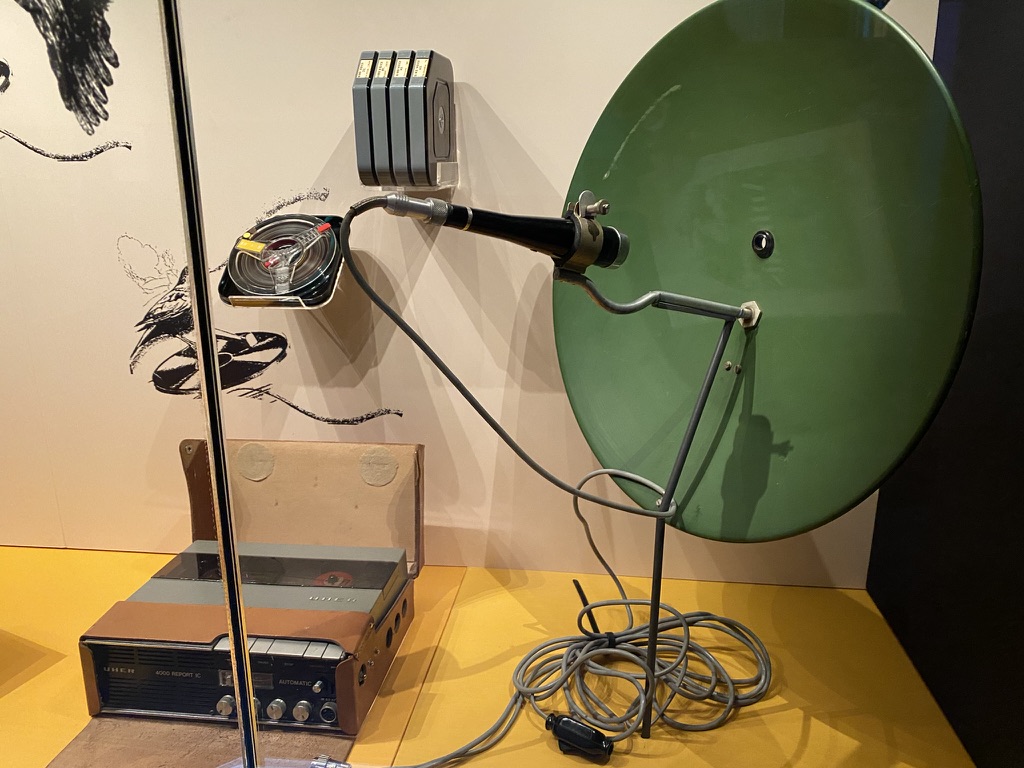
● Finally, there is sound recording equipment often used in the 1970s and 1980s to record animals in the wild. It comprises a parabolic microphone, with a concave dish to amplify the song or call of the animal being recorded. The sound was then recorded onto tape using the Uher Report Monitor — a portable equipment that would still be incredibly cumbersome by today’s standards.

Animals, Art, Science and Sound presents a unique opportunity to witness exhibits that showcase the significance of sound in enhancing our understanding of animal life and enriching our experience of the world.

British Library in London

Until 28th August 2023